If you’ve owned a property on the Sunshine Coast for more than a summer or two, you already know the drill. One month the rain won’t stop, the next you’re watching your lawn turn crunchy and brown under water restrictions. It’s one of the trickier parts of gardening in this part of Queensland — the climate swings between soggy and bone dry, sometimes within the same season.
The good news is you don’t have to choose between a lawn that looks good and a water bill that doesn’t hurt. A water-wise garden isn’t about giving up on greenery or settling for gravel and cactus. Done properly, it’s a garden that’s built to handle our local conditions from the ground up, so it needs less intervention from you and copes far better when the taps get restricted.
Here’s what that actually looks like for homes around Beerwah, Noosa, Buderim and the wider Sunshine Coast.
Why Water-Wise Landscaping Matters Here Specifically
A lot of general gardening advice floating around online is written for cooler, drier climates down south, or for places with completely different soil. That advice doesn’t always translate well to a Sunshine Coast backyard, where you’re dealing with sandy coastal soils in some pockets, heavier clay in others, high humidity, and a wet season that can dump weeks of rain before disappearing entirely.
Water-wise landscaping, when it’s done right for our region, isn’t just about cutting back on the hose. It’s about choosing plants and turf that are naturally suited to how our weather actually behaves, setting up the soil so it holds moisture properly instead of shedding it, and designing garden beds so water goes where it’s needed instead of running straight off the property.
Get that combination right and you end up with a garden that looks better for longer, needs less fuss, and isn’t the first thing to die the moment water restrictions kick in.
Start With the Soil, Not the Plants
Most people jump straight to picking out plants, but the real work happens underground. Sandy soil, which is common closer to the coast, drains so fast that water barely has a chance to reach the roots before it’s gone. Clay-heavy soil, on the other hand, can do the opposite and hold water at the surface where it evaporates quickly or pools and suffocates roots.
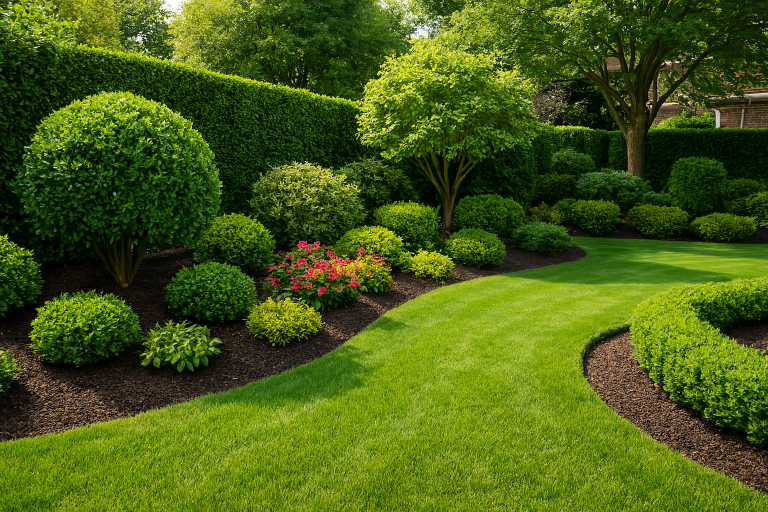
Improving soil structure with organic matter and a decent layer of mulch makes a bigger difference to drought resilience than almost anything else you can do. Mulch alone can cut water loss from the soil surface significantly, and it keeps root zones cooler during those brutal January afternoons.
This is one of the areas where a professional eye pays off, because it’s easy to get the soil prep wrong and waste money on plants that were never going to thrive in that spot anyway.
Choosing the Right Turf for Less Watering
Not all lawns are created equal when it comes to drought tolerance. This is something we get asked about constantly, and it usually comes down to a choice between a couple of options.
Buffalo grass tends to hold its colour and density better through dry spells and needs less frequent watering once it’s established, which makes it a strong pick for a lot of Sunshine Coast properties. Couch grass copes with heat well too and can handle a bit more foot traffic, but it’s generally less shade-tolerant and can go dormant and brown off faster without consistent watering.
If you’re not sure which one suits your yard, it really depends on your soil type, how much sun the area gets, and how the space gets used day to day. A quick chat with someone who knows the local ground conditions saves a lot of trial and error — and a lot of wasted turf.
Plant Choices That Actually Cope With Our Climate
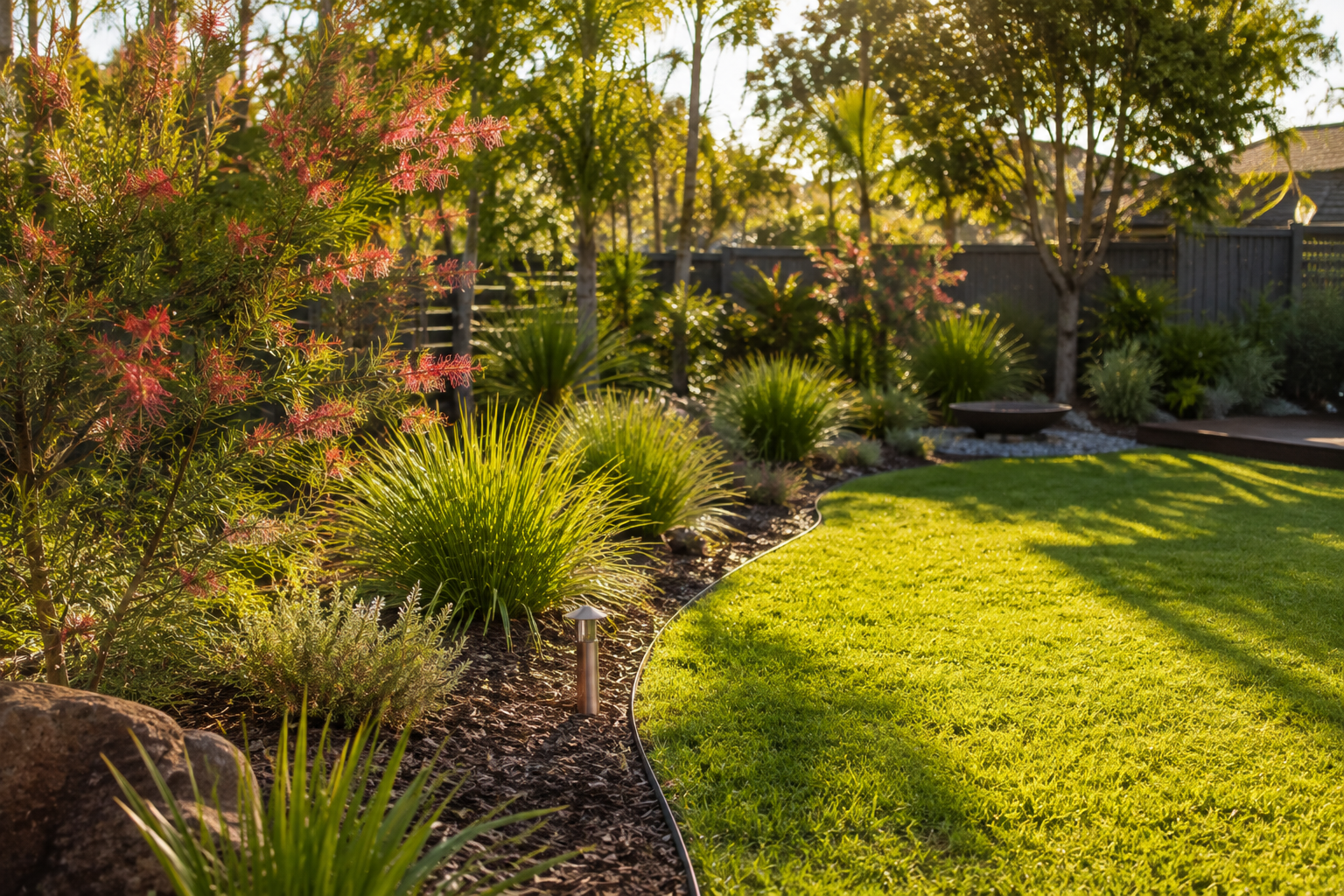
When it comes to garden beds, native and near-native species are almost always the smarter long-term choice. Plants like lomandra, grevillea, westringia, and coastal rosemary have evolved to handle exactly the swings between wet and dry that catch a lot of imported ornamental varieties out. They establish deep root systems that reach moisture other plants simply can’t access, and once they’re settled in, they need a fraction of the attention.
Grouping plants by their water needs is another simple trick that gets overlooked constantly. If a thirsty fern is planted next to a drought-hardy succulent, one of them is always going to be either underwatered or overwatered. Zoning your garden so similar water needs sit together means you can water efficiently instead of drenching the whole yard to keep one thirsty patch alive.
Smart Watering Habits Make a Bigger Difference Than You’d Think
Even the most drought-tolerant garden still needs some water, especially while it’s establishing. The timing and method matter more than most people realise. Watering early in the morning, before the heat of the day sets in, means far less is lost to evaporation compared to a midday sprinkle. Deep, infrequent watering also encourages roots to grow downward searching for moisture, which builds a much more resilient plant than frequent light watering that keeps roots shallow and lazy.
If your property still relies on manual watering or an old irrigation setup, it might be worth having someone take a look at whether the system is actually placing water where it’s needed, rather than running off the driveway or soaking a garden bed that’s already saturated.
Rethinking the Layout, Not Just the Plant List
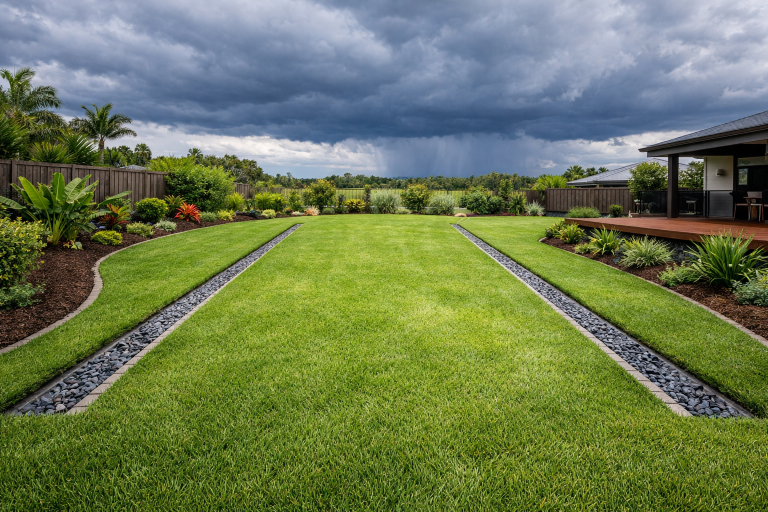
Sometimes the biggest water savings come from rethinking how a space is used rather than swapping one plant for another. Reducing high-maintenance lawn areas that see little foot traffic and replacing them with mulched garden beds, pebble features, or hardy groundcovers can cut watering demand dramatically while still looking intentional and well-kept, rather than neglected.
This is particularly worth considering for larger properties or acreage blocks around Beerwah, where maintaining a huge expanse of thirsty lawn can become a real time and cost burden. A well-planned mix of turf, garden beds, and hardscaping tends to look more considered anyway, and it’s far easier to maintain long term.
Getting the Balance Right for Your Property
Every property on the Sunshine Coast is a little different. A shaded block in Buderim will need a different approach to an exposed, sandy yard near Noosa’s coastline, and a rural property out towards Beerwah has its own set of soil and drainage quirks. There isn’t a single template that works everywhere, which is exactly why so many water-wise makeovers fall short when people copy a plan they found online without accounting for their own conditions.
If you’re planning a garden refresh, thinking about new turf, or just want a landscape that copes better with our unpredictable weather, our team can walk your property, look at your soil and sun exposure, and put together a plan that actually suits your space. From soil preparation through to turf selection and full turfing and landscape preparation, we handle the groundwork that makes water-wise gardens actually work, not just look good on paper.
Pair that with an ongoing lawn care treatment plan and regular garden maintenance, and you’ve got a property that stays looking sharp through every season, wet or dry, without you having to think about it constantly.
Want to know what a water-wise setup would look like for your place? Get in touch for a free quote and we’ll talk you through the options that make sense for your soil, your sun, and your budget.